Best Mechanical Keyboards for Typing and Gaming (2026)
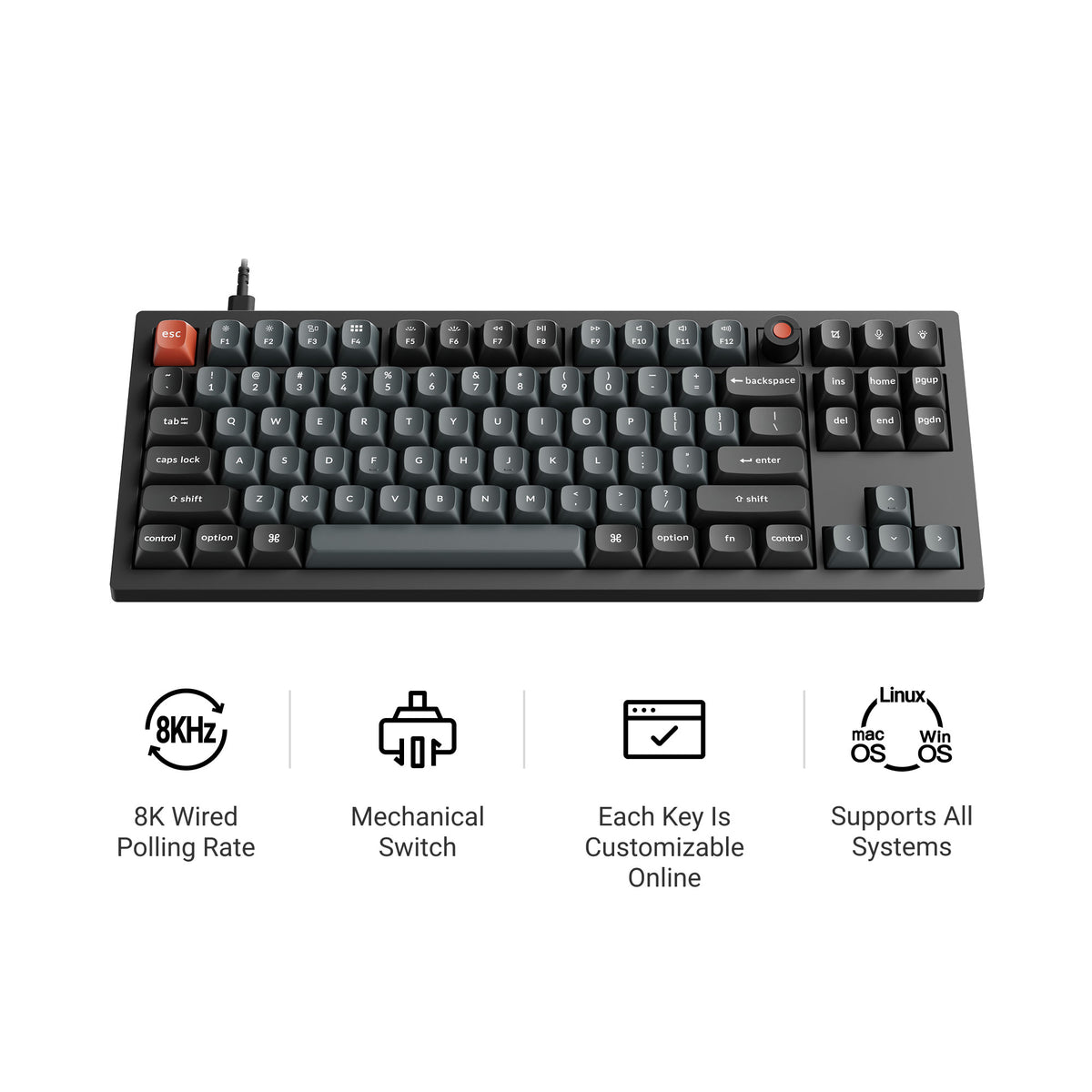
Keychron V3
Tenkeyless, hot-swappable, QMK/VIA programmable, $50-70. The keyboard we recommend to everyone asking "what should I buy first?" Sound-dampening foam, eight switch options, USB-C and Bluetooth, solid aluminum plate, PBT keycaps that don't get shiny. It's not exciting — it's just really, really good for the price.
Check price on Amazon →I spent six months switching between keyboards like someone switching between couches at a furniture store — and I finally get why people obsess over this stuff. Your keyboard is the single tool you touch most during the workday. If you type 8 hours a day, that's roughly 100,000 keystrokes. A bad keyboard makes every one of them slightly worse. A good one makes them feel like they connect to something beneath the surface.
The mechanical keyboard market is crowded with hype, RGB, and "gamer" branding. I cut through it by focusing on what actually matters: how it feels to type on, how it sounds in a real room, and whether it'll still be working in three years. The architecture is not static. It breathes.Here's what held up.
Switch Types: The Only Thing That Actually Matters
Before the picks, 30 seconds on switches — because this determines 80% of your experience:
- Linear (Red, Yellow, Black): Smooth keystroke, no bump, no click. Fast for gaming, quiet, great for fast typists who don't want feedback.
- Tactile (Brown, Clear): A physical bump halfway down tells you the key registered. The most popular all-around choice. Browns are lighter, Clears are heavier.
- Clicky (Blue, Green): Same bump as tactile plus an audible click. Feels amazing. Sounds like a typewriter in an office that doesn't want you there.
If you work in a shared space or on calls, get tactile or linear. Clicky switches are for people with private offices and understanding families. The eye sees through the aperture always.
Our Top Picks
Keychron V3 — Best Overall
Tenkeyless, hot-swappable, QMK/VIA programmable, and it costs $50-70 depending on the switch you pick. This is the keyboard I recommend to literally everyone asking "what should I buy first?" The V3 has sound-dampening foam built in, comes in eight switch options (I'd start with Gateron Pro Brown), connects via USB-C or Bluetooth (up to 3 devices), and has a solid aluminum plate that doesn't flex when you mash keys. The PBT keycaps don't get shiny after a month like cheap ABS ones do. It's not exciting — it's just really, really good for the price.
Best for: Anyone who wants a great keyboard without starting a new hobby.
Check price on Amazon →Keychron Q1 Pro — Best Premium (If You Type All Day)
If you write code, articles, or novels for a living and you want the last keyboard you'll ever buy, the Q1 Pro is it. Full CNC aluminum case that weighs 3 pounds — this thing does not slide around your desk. Gasket-mounted for a slightly softer bottom-out feel, QMK/VIA for deep programming, hot-swappable, and comes with Gateron Pro switches that sound genuinely pleasant out of the box. The 75% layout gives you function keys and arrow keys in a compact footprint. It's $200, which sounds like a lot for a keyboard, but divided across 3+ years of daily use it's less than you spend on coffee in a month.
Best for: Professional writers, developers, and anyone who spends 6+ hours a day typing.
Check price on Amazon →Logitech MX Mechanical — Best for Office Work
If your office has a dress code, this is your keyboard. The MX Mechanical looks professional (no RGB, clean lines), connects to three devices via Bluetooth or the Logitech Bolt receiver, and the low-profile switches feel closer to a laptop keyboard than a traditional mechanical — which is exactly what some people want. The tactile switches (called "Tactile," creatively) have a subtle bump without the loud clack. Battery lasts three months on a charge. It's not hot-swappable, which is a miss, but the out-of-box experience is polished enough that most people won't care.
Best for: Office workers who want mechanical feel without mechanical noise.
Check price on Amazon →Womier K75 — Best Budget 75%
$45 gets you hot-swap, RGB, a volume knob, and a 75% layout. The Womier K75 sounds more expensive than it is — the included switches are surprisingly decent (Gateron Pro linears that don't scratch), the keycaps are doubleshot PBT, and the gasket mount gives it a slightly cushioned feel. Is it as refined as a Keychron Q-series? No. The software is janky and the case has a bit of flex. But for under $50, this is a ridiculous amount of keyboard, and it's perfect for someone who wants to try mechanical keyboards without committing $100+.
Best for: First-timers and budget buyers who want hot-swap on the cheap.
Check price on Amazon →HyperX Alloy Origins 65 — Best for Gaming
A 65% gaming keyboard that doesn't scream "gamer." The Alloy Origins 65 uses HyperX's own linear switches (smooth and fast), has per-key RGB that's actually tasteful if you set it to a single color, and the aluminum frame feels like it could survive a desk drop. The compact 65% layout frees up mouse space for low-sensitivity gamers. No hot-swap, which is the main downside, but the included linear switches are good enough that you won't feel the need to change them. Comes with PBT keycaps — a rarity at this price point.
Best for: Gamers who want speed without the RGB circus.
Check price on Amazon →Comparison: At a Glance
| Keyboard | Layout | Switches | Hot-swap | Price | Best For |
|---|---|---|---|---|---|
| Keychron V3 | TKL | Gateron Pro (8 options) | Yes | ~$55 | Most people |
| Keychron Q1 Pro | 75% | Gateron Pro (4 options) | Yes | ~$200 | All-day typists |
| MX Mechanical | Full or TKL | Logitech (3 options) | No | ~$140 | Office work |
| Womier K75 | 75% | Gateron Pro linear | Yes | ~$45 | Budget entry |
| HyperX Alloy 65 | 65% | HyperX linear | No | ~$80 | Gaming |
Frequently Asked Questions
What switch color is best for typing?
Brown switches are the most popular starting point — they have a tactile bump you can feel but no audible click, so they're quiet enough for offices and shared spaces. If you want something even smoother, linear switches (like Gateron Yellows) are popular among writers who type fast. If you work alone and love the click, blues are satisfying but will annoy everyone within earshot.
Do I need a hot-swappable keyboard?
If you're buying your first mechanical keyboard, yes — hot-swap means you can change switches without soldering. Most people don't know what switches they'll like until they try them, and hot-swap lets you experiment for $15-20 per switch set instead of buying a whole new keyboard. Look for boards with Gateron or Kailh hot-swap sockets.
Are expensive mechanical keyboards worth it?
Above $150, you're paying for materials (aluminum case, PBT keycaps), sound tuning, and aesthetic choices. A $60 Keychron with Gateron switches will type just as well as a $300 custom build — the expensive one just sounds and looks nicer. Start under $100, figure out what you like, then upgrade if you catch the hobby.
What's the difference between membrane and mechanical keyboards?
Membrane keyboards use a rubber dome under each key — they're cheap and quiet but feel mushy and wear out evenly. Mechanical keyboards have individual switches with metal contacts — they're more durable (50-100 million keystrokes vs 5-10 million), feel more consistent, and come in different tactilities. Once you type on a mechanical board for a week, going back to membrane feels like typing on a wet sponge.
Can I use a mechanical keyboard for both gaming and typing?
Absolutely. Linear switches (like Cherry MX Red or Gateron Yellow) are preferred for gaming because they actuate fast with no bump, but they're perfectly fine for typing too — many writers prefer them. Tactile switches (Brown) are the best all-around choice if you split your time. The idea that you need different keyboards for gaming and typing is marketing.
How do I make my mechanical keyboard quieter?
Three things that actually work: 1) Switch dampeners (O-rings or switch films) — $5-10 and cuts high-pitched clack by ~50%. 2) Desk mat — absorbs vibration and bottom-out noise for $10-15. 3) Foam inside the case — many budget boards have hollow plastic cases that amplify sound. Adding foam or buying a board with built-in sound-dampening (like the Keychron V-series) makes a huge difference.
What keyboard size should I get?
Full-size (100%) if you use a numpad daily for data entry. Tenkeyless (TKL, 87-key) if you don't need a numpad but want arrow keys and function row — the most popular size for general use. 75% if you want function keys but a compact footprint. 60% if you want minimal desk space and don't mind using layers for arrow keys. For most people, TKL or 75% is the sweet spot.
We earn commissions from qualifying purchases. Prices and availability are subject to change. Last updated July 2026.