Best Resistance Bands for Home Workouts (That Don't Snap)
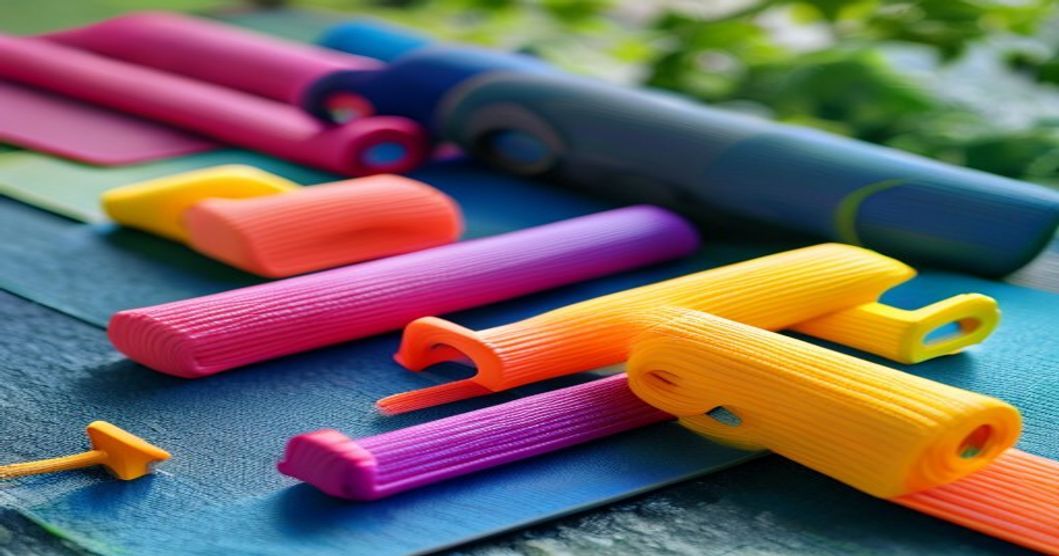
Fit Simplify Loop Band Set
5 latex loop bands, 5 resistance levels, comes with carrying bag and instruction booklet, $13. The set that launched a million home workouts during 2020 and somehow still holds up. Five bands from light to extra heavy, clearly labeled, and cheap enough that when one eventually snaps (and it will — latex degrades) you have four backups. The instruction booklet is actually useful, with 30+ exercises organized by muscle group.
Check price on Amazon →I've had a resistance band snap on me mid-rep. It was a cheap tube band, and it whipped back and hit my wrist like a rubber band on steroids. That's the moment you start caring about band quality. A snapped band can bruise, break skin, or worse — if you're doing overhead presses, a band failure means a handle flying at your face.
Resistance bands are one of the best value fitness purchases you can make. For $15-40, you get a full-body workout tool that weighs nothing, takes zero space, and travels in a sock. But quality matters — not just for safety, but because a band that rolls, slips, or loses tension after a month wastes your time and risks injury.
What Actually Matters in Resistance Bands
- Material: Latex bands are stretchier and cheaper but snap after 6-12 months. Fabric bands don't snap, don't roll, and last 1-2 years, but they're less stretchy and cost more. Tube bands with handles are best for upper body but the handles are failure points.
- Resistance range: A good set has 5+ levels from 5-50 lbs. If you're only buying one band, get medium (10-15 lbs) — you can always double it for more resistance.
- Width: Wider bands (2+ inches) don't roll up your thighs during lower-body exercises. Narrow bands (1 inch) roll constantly and are mainly for arm work.
- Durability signs: Bands that feel powdery, have visible cracks, or have lost elasticity are about to snap. Replace them immediately.
Our Top Picks
Fit Simplify Loop Band Set — Best Overall
Five latex loop bands at five resistance levels, from extra light (5-10 lbs) to extra heavy (25-35 lbs). They're 12 inches long and 2 inches wide, which means they don't roll during squats and glute bridges like narrow bands do. The latex is natural rubber, which has more elasticity and snap-back than synthetic alternatives.
After three months of daily use, the light bands showed some surface wear but no loss of elasticity. The heavy bands held up perfectly. The carrying bag is thin but functional — it keeps them together in a gym bag. The included booklet with exercise illustrations is genuinely helpful if you're new to band training.
Downside: they're latex, so they will eventually snap. Expect 6-12 months of regular use before needing replacements. Also, the 12-inch length is too short for tall users (6'2"+) doing overhead exercises — the band maxes out its stretch before you reach full extension.
Best for: Anyone who wants a complete set of loop bands for under $15.
Check price on Amazon →Perform Better Fabric Bands — Best for Lower Body
Three fabric resistance bands (light, medium, heavy) that don't roll, don't snap, and don't pinch. The fabric material grips your skin or leggings without slipping, which makes them vastly superior to latex for hip thrusts, glute bridges, and lateral walks. The 3-inch width distributes pressure evenly so they don't dig into your thighs like thin bands do.
They don't stretch as far as latex bands — about 1.5x their resting length vs 2.5x for latex. This means less resistance range per band, which is why the set only has three levels instead of five. But for lower body work, you don't need extreme stretch; you need consistent tension and no rolling. These deliver both.
Downside: the fabric absorbs sweat and needs washing (hand wash, air dry). The resistance levels aren't labeled in lbs — they're just light/medium/heavy, which is vague. And at $25-30 for 3 bands, they're more expensive per band than latex.
Best for: Lower body work where latex bands roll or pinch.
Check price on Amazon →Whatafit Tube Band Set — Best for Upper Body
Five tube bands with cushioned handles, door anchor, ankle straps, and a carrying bag, $25. Tube bands are better than loop bands for upper body work because the handles give you a proper grip for curls, rows, and presses. The Whatafit set has 5 resistance levels from 10-50 lbs, and you can stack multiple bands on one handle for up to 100 lbs of combined resistance.
The handles are foam-padded and comfortable even during long sets. The door anchor is a simple loop of webbing with a foam stopper — it works but can scuff painted door frames if you're not careful. The ankle straps are useful for leg extensions and donkey kicks.
Downside: the connection between the tube and the handle is the weak point. After 4-5 months of regular use, one of the lighter bands started separating at the handle. Whatafit replaces these under warranty, but it means 2-3 weeks without that band. Also, the tubes stick together in the bag if they get warm (like in a car), which is annoying but not a dealbreaker.
Best for: Upper body workouts that need handles and door anchoring.
Check price on Amazon →Renoj Fabric Hip Bands — Best for Glutes
Three fabric bands specifically designed for glute and hip work — wider (3.3 inches) than most fabric bands and with anti-slip rubber strips on the inside. The rubber grip is the key feature: these bands stay exactly where you put them during hip thrusts, squats, and lateral walks. No sliding, no rolling, no stopping mid-set to readjust.
The three resistance levels (light/medium/heavy) cover the range most people need for lower body work. The fabric is breathable enough that they don't get disgustingly sweaty during a hard workout, and they're machine washable on cold.
Downside: these are specifically lower body bands — they're too wide for arm exercises. The rubber grip strips make them impossible to use comfortably on bare skin (they pull), so you need to wear leggings or pants. And the heaviest band maxes out at about 30 lbs of resistance, which is too light for advanced lifters.
Best for: Glute and hip work where staying in place matters most.
Check price on Amazon →TRX Band Kit — Best for Physical Therapy
If you're recovering from an injury or doing PT-prescribed exercises, the TRX Band Kit has what you need: three thin latex bands in light, medium, and heavy resistances that are easy on healing joints. The bands are thinner (0.5 inches) and shorter than fitness bands, which means less tension per rep and more control over small movements. They're designed for the exercises PTs actually prescribe: shoulder external rotations, clamshells, wall walks, and banded pull-aparts.
The latex is medical grade, which means it's more consistent and less likely to have weak spots than fitness bands. The set comes with a printed exercise guide that matches common PT protocols.
Downside: they're too light for strength training. Even the heavy band maxes out at about 8 lbs of resistance. The thin width means they can roll if used for lower body exercises. And at $20 for 3 thin bands, they're more expensive per band than the Fit Simplify set. But for PT, you want thin, consistent bands, not thick fitness loops.
Best for: Physical therapy and rehabilitation exercises.
Check price on Amazon →Comparison: At a Glance
| Bands | Type | Pieces | Max Resistance | Price | Best For |
|---|---|---|---|---|---|
| Fit Simplify | Latex loop | 5 | ~35 lbs | ~$13 | All-around fitness |
| Perform Better | Fabric loop | 3 | ~30 lbs | ~$28 | Lower body, no-roll |
| Whatafit | Tube w/ handles | 5 | ~50 lbs (stackable) | ~$25 | Upper body work |
| Renoj Hip | Fabric w/ grip | 3 | ~30 lbs | ~$15 | Glutes and hips |
| TRX Band Kit | Thin latex loop | 3 | ~8 lbs | ~$20 | Physical therapy |
Frequently Asked Questions
What's the difference between loop bands and tube bands?
Loop bands are flat, continuous circles of latex or fabric — you step on them, pull them, or wrap them around your legs. They're best for lower body work (glute bridges, lateral walks, squats) and stretching. Tube bands have handles on each end and are better for upper body work (bicep curls, rows, chest presses) because the handles give you a better grip. If you're doing full-body workouts, get a set of both.
Can resistance bands replace weights?
For most home workouts, yes — with caveats. Bands provide progressive resistance (heavier at the end of the movement), which is different from weights (constant resistance). This actually makes bands better for some exercises like lateral raises and hip abductions. However, bands can't replicate the heavy compound lifts (squats over 200 lbs, deadlifts) that barbells provide. If you're doing general fitness, physical therapy, or home workouts under 50 lbs of resistance, bands work. If you're training for powerlifting, you need weights.
How long do resistance bands last?
Latex bands: 6-12 months with regular use (3-4x/week). They lose elasticity over time and will eventually snap, usually without warning. Fabric bands: 1-2 years with regular use. The fabric doesn't snap, but it can stretch out and lose resistance. Tube bands: 1-2 years with regular use. The rubber core lasts, but the connection points (handles, carabiners) tend to fail before the band itself. Always inspect bands before use — small tears or discoloration mean it's time to replace them.
What resistance level should I start with?
If you're new to resistance training, start with a light-medium set (5-25 lbs resistance range). A set of 5 bands with increasing resistance gives you room to grow. If you can do 15+ reps easily with a band, move up a level. If you can't do 8 reps, move down.
Why do resistance bands snap and how do I prevent it?
Latex bands snap for three reasons: age (they degrade after 6-12 months of regular use), overstretching (stretching beyond 2.5x their resting length weakens the material), and environmental damage (sunlight, heat, and body oils break down latex). To prevent snapping: inspect bands before each use for small tears or discoloration, don't stretch beyond 2.5x resting length, store in a cool dark place, and replace latex bands every 6-12 months. Fabric bands don't snap but they do lose elasticity over time.
We earn commissions from qualifying purchases. Prices and availability are subject to change. Last updated July 2026.